Does one tooth feel fine until you chew, then suddenly send a sharp signal through your mouth? Tooth pain when biting can come from several sources, including a crack, an inflamed ligament, deep decay, or a problem inside the tooth. Because the cause is not always visible, an evaluation for cracked teeth in Humble, TX may be an important step when the pain is brief, unpredictable, or triggered as you release your bite.
It is tempting to avoid the sore side and hope the problem settles. However, tooth pain when biting often means that pressure is irritating a damaged structure. The discomfort may be mild today and more intense next week. Therefore, finding the source early can help protect the tooth and may prevent a smaller problem from becoming a dental emergency.
What Tooth Pain When Biting Can Feel Like
Patients describe tooth pain when biting in different ways. Some feel a quick, electric sensation when they bite into bread, meat, or something crunchy. Others notice a dull pressure that remains after a meal. In addition, some people feel pain only when they release their bite, which can be a useful clue for a cracked tooth.
The pain may seem to move because nearby teeth share nerve pathways. As a result, you might point to one tooth even though the source is beside it. A back tooth can also be difficult to identify without targeted bite testing. This is one reason an endodontic evaluation can be helpful when tooth pain when biting is persistent but difficult to locate.
Temperature sensitivity may occur at the same time. For example, a cracked or inflamed tooth may react to cold water and then hurt when chewing. Meanwhile, a tooth with inflammation around the root may feel more like pressure than temperature sensitivity. The pattern matters, but no single symptom confirms the diagnosis by itself.
Common Cause 1: A Cracked Tooth
A crack can allow sections of a tooth to flex slightly under pressure. That movement may irritate the pulp, which is the soft tissue containing nerves and blood vessels inside the tooth. Therefore, tooth pain when biting can appear even when the crack is too small to see in a mirror.
Cracks can develop from biting hard objects, clenching, grinding, large fillings, age-related wear, or an accident. In some cases, the discomfort is inconsistent. You may chew several times without pain and then feel a sudden zing at a particular angle. This unpredictable pattern is common because the crack may open only under a specific type of force.
Not every crack requires the same treatment. A shallow enamel line may need monitoring, while a fractured cusp may be restored by a general dentist. However, if a crack reaches the pulp, root canal treatment and a protective crown may be considered. A split tooth or a crack that extends deeply below the gum may have a different outlook. The location and extent of the crack guide the recommendation.
Common Cause 2: Inflammation Inside the Tooth
Deep decay, a leaking restoration, repeated dental work, or trauma can irritate the pulp. At first, you may notice sensitivity to cold or sweets. As inflammation progresses, tooth pain when biting may develop because the tissues around the root become irritated.
Sometimes the tooth begins to ache without a trigger, especially at night. In addition, heat sensitivity may linger after the hot food or drink is gone. These changes can suggest that the pulp is having difficulty recovering. If the pulp becomes infected or loses vitality, bacteria may move through the root canal system and affect the bone around the root tip.
An endodontist evaluates the full pattern rather than relying on pain alone. Cold testing, tapping, palpation, bite tests, digital imaging, and a review of the tooth’s history can help distinguish reversible irritation from a condition that may require treatment.
Common Cause 3: A High Filling or Crown
If tooth pain when biting begins soon after a filling, crown, or temporary restoration, the bite may be slightly uneven. Even a small high spot can cause the treated tooth to contact before the surrounding teeth. Consequently, the ligament around the root can become sore.
This type of tenderness often feels like the tooth is taller or more noticeable when the teeth meet. It may not cause spontaneous throbbing or prolonged temperature sensitivity. A dentist can check the bite with marking paper and adjust the restoration when appropriate.
However, do not assume that every sore tooth after dental work has a simple high spot. The tooth may also have deeper inflammation, a crack, or another concern. Therefore, call the treating office and describe when the tooth pain when biting started, what triggers it, and whether the symptoms are improving.
Common Cause 4: Infection Around the Root
An infection can create pressure and inflammation around the root tip. In this situation, the tooth may feel tender when chewing, tapping, or touching the gum nearby. Swelling, drainage, a pimple-like bump on the gum, or a bad taste may also occur. However, some infections cause few obvious symptoms.
Tooth pain when biting from an infection should be evaluated promptly. Medication alone does not remove infected tissue from inside a tooth. The source may require root canal treatment, retreatment of a previously treated tooth, or another procedure based on the diagnosis.
If facial swelling spreads, fever develops, or swallowing or breathing becomes difficult, seek urgent care. These symptoms go beyond routine tooth sensitivity and need immediate attention.
Common Cause 5: Clenching and Grinding
Clenching and grinding can overload teeth and the supporting ligaments. As a result, several teeth may feel sore when you wake up or after a stressful day. The jaw muscles may also feel tired, and the discomfort may be more generalized than pain from one infected tooth.
Nevertheless, grinding can also contribute to cracks. Therefore, a history of clenching does not rule out a specific structural problem. An examination can help determine whether tooth pain when biting is related to bite forces, a damaged tooth, or both.
A nightguard may be recommended in some situations, but it should not be used as a substitute for diagnosing a tooth that has sharp or worsening pain. First, the source needs to be understood.
Benefits of Early Evaluation for Tooth Pain When Biting
- Clearer diagnosis: Focused testing can separate a crack, pulp problem, bite issue, and root infection.
- More treatment options: A tooth evaluated early may be easier to protect before damage extends farther.
- Reduced risk of an emergency: Addressing tooth pain when biting may prevent sudden swelling or severe nighttime pain.
- Better tooth preservation: Timely care can support the goal of keeping the natural tooth whenever possible.
- Less guesswork: A professional evaluation is more reliable than repeatedly testing the tooth at home.
- Improved comfort: Treating the cause can make chewing, sleeping, and daily activities easier.
How an Endodontist Finds the Source
Diagnosis often begins with a conversation. The endodontist may ask whether the tooth pain when biting occurs on pressure, on release, or both. You may also be asked about cold sensitivity, heat sensitivity, spontaneous pain, swelling, recent dental work, clenching, or an injury.
Next, several teeth may be compared. A cold test can show whether the pulp responds normally, too strongly, or not at all. Tapping and palpation can reveal irritation around the root. A bite test applies controlled pressure to different parts of the chewing surface, which can help localize a crack.
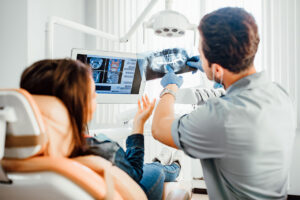
Digital X-rays may show decay, changes near the root, a large restoration, or other clues. In selected cases, three-dimensional imaging may provide additional information. Lake Houston Endodontics also uses advanced dental technologies to support detailed diagnosis and treatment planning.
Even advanced imaging may not show every fine crack. Therefore, the diagnosis often depends on combining the history, examination, testing, and imaging rather than expecting one test to answer every question.
What You Can Do Before Your Appointment
Until the tooth is evaluated, avoid chewing hard or sticky foods on the painful side. Choose softer foods and keep the area clean. In addition, note which actions trigger the tooth pain when biting. Does it hurt with firm pressure, on release, with cold, or without any trigger? This information can help during the examination.
Do not place aspirin or topical pain medication directly on the gum. Also, do not keep biting on hard objects to identify the tooth. Repeated pressure may worsen irritation or extend a crack.
Over-the-counter pain relief may be appropriate for some patients, but medical conditions, allergies, pregnancy, and other medications can affect what is safe. Follow guidance from your healthcare provider or dental team.
Frequently Asked Questions About Tooth Pain When Biting
Can tooth pain when biting go away on its own?
Temporary irritation can improve, but persistent or recurring pain should be evaluated. A crack, infection, or damaged pulp will not reliably resolve just because you stop chewing on that side.
Why does my tooth hurt when I release my bite?
Pain on release can occur when a cracked section of tooth flexes under pressure and then moves back as the pressure is removed. However, testing is needed because other conditions can cause similar symptoms.
Does tooth pain when biting always mean I need a root canal?
No. A high filling, a shallow fracture, gum irritation, or clenching may cause biting tenderness. Root canal treatment is considered when testing shows that the pulp or tissues around the root require endodontic care.
Should I call if the pain is mild?
Yes, especially if the pain returns, becomes sharper, or is limited to one tooth. Mild tooth pain when biting can be an early signal, and early assessment may provide more options.
Get a Clear Answer Before the Pain Changes
Tooth pain when biting is a symptom, not a diagnosis. The source may be a crack, inflammation, an uneven bite, infection, or excessive force. Because these problems can feel similar, careful testing is the most dependable way to choose the right treatment.
For focused evaluation and endodontic care in Humble, contact Lake Houston Endodontics. Call Us Today at (832) 777-6056 or contact the practice online to schedule an appointment for tooth pain when biting.